
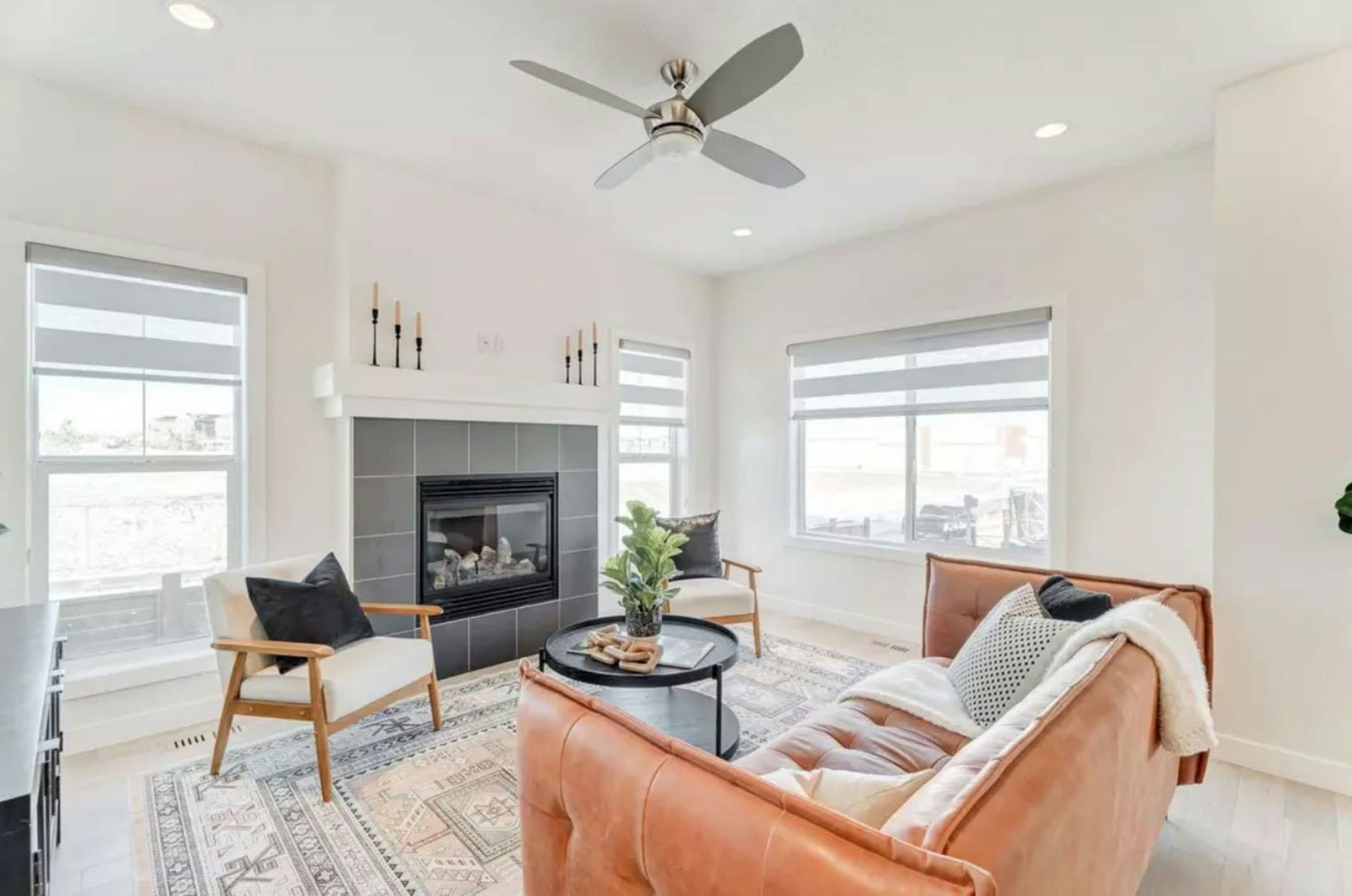
Imagine touring two identical homes.
The first is empty.
Every room echoes.
The walls feel cold.
The living room looks surprisingly small.
Now imagine the second.
Soft linen curtains frame the windows.
A cozy reading chair sits beside the fireplace.
Fresh flowers brighten the dining table.
Warm lighting fills every room.
Most buyers immediately prefer the second home.
But here's the interesting part:
The houses may be exactly the same.
Nothing structural changed.
Nothing mechanical changed.
Nothing about the home's quality changed.
Only your perception did.
That's the power of staging.
Professional staging isn't about deception—it's about presentation. The challenge for buyers is recognizing where presentation ends and objective evaluation begins.
Staging Changes How Your Brain Sees a Home
When you walk into a thoughtfully staged house, your brain processes more than square footage and floor plans.
It also notices:
- warmth
- comfort
- beauty
- organization
- lifestyle
- possibility
Instead of thinking,
"How big is this room?"
you begin thinking,
"I could see us celebrating Christmas here."
That's exactly what staging is designed to encourage.
You're Buying a Vision of Your Future
One reason staging is so effective is that it helps buyers imagine living in the home.
You don't just see a dining room.
You picture birthday dinners.
You don't just see a backyard.
You picture summer barbecues.
You don't just see a nursery.
You imagine bringing home your first baby.
Those emotional pictures are incredibly powerful—and completely natural.
The danger comes when those imagined memories begin outweighing the facts in front of you.
Beautiful Rooms Can Make Everything Feel Better
Psychologists call this the halo effect.
A beautifully designed kitchen can make buyers assume:
- the roof has been maintained
- the plumbing is newer
- the electrical system is updated
- the asking price is fair
- the home has been well cared for
None of those things are guaranteed.
One beautiful room doesn't tell you how the rest of the house has been maintained.
Staging Makes Rooms Feel Larger
Furniture placement is surprisingly strategic.
Professional stagers know how to:
- improve traffic flow
- highlight natural light
- create conversation areas
- emphasize ceiling height
- draw attention to architectural features
Sometimes they even use slightly smaller furniture to make rooms appear larger.
Again, there's nothing misleading about this.
It's smart design.
But buyers should still ask themselves:
Would this room function well with my furniture?
Would this room function well with my furniture?
That's a much more useful question than simply admiring the layout.
Staging Directs Your Attention
Every staged home tells you where to look.
Beautiful artwork.
Fresh flowers.
Designer light fixtures.
Elegant dining tables.
Large windows.
Your attention naturally follows these focal points.
Meanwhile, you may spend less time noticing:
- ceiling stains
- window seals
- aging HVAC equipment
- uneven flooring
- foundation cracks
- plumbing fixtures
- attic access
The home hasn't hidden these things.
Your attention has simply been redirected.
Empty Homes Create the Opposite Problem
Interestingly, vacant homes can also distort your judgment.
Without furniture, buyers often think:
"The bedrooms feel tiny."
"This living room is awkward."
"I don't think my furniture will fit."
In reality, many buyers struggle to judge room size accurately without visual reference points.
Both staged and empty homes can create misleading impressions—just in different ways.
Luxury Doesn't Always Mean Quality
One of the easiest mistakes buyers make is confusing expensive finishes with overall craftsmanship.
Beautiful homes can still have:
- poor drainage
- aging mechanical systems
- deferred maintenance
- inexpensive construction materials
- rushed renovations
Likewise, a dated home may have:
- newer plumbing
- a recently replaced roof
- upgraded electrical service
- excellent maintenance records
- higher-quality construction
Cosmetics and quality don't always move together.
Ask Better Questions During Every Showing
Instead of asking,
"Do I love this house?"
Try asking:
- What permanent features am I evaluating?
- What condition are the major systems in?
- What maintenance signs do I notice?
- What questions remain unanswered?
- If this home were empty, would I still feel the same way?
Those questions help separate emotional reactions from practical evaluation.
The Best Buyers Appreciate Staging—But Look Beyond It
There's nothing wrong with enjoying a beautifully presented home.
In fact, staging serves a valuable purpose.
It helps buyers understand how a space can live.
The mistake is letting the staging become the evaluation.
Instead, think of staging as the cover of a book.
It may encourage you to pick it up.
But it shouldn't determine whether you buy it.
That decision should come from understanding everything inside.
Make More Confident Decisions With WelcomeIn Home Partner
Professional staging can make almost any home feel inviting. WelcomeIn Home Partner helps you look beyond that first impression by guiding you through the details that matter most during a showing.
As you tour, Home Partner prompts you to evaluate the home's condition, maintenance, major systems, and potential concerns—not just its finishes and furnishings. It also helps you organize your observations so you can compare homes objectively instead of relying on memory or emotion.
When it's time to make an offer, you'll have more than a great feeling about the house—you'll have a clearer understanding of what you're buying.
Frequently Asked Questions
Does home staging really influence buyers?
Yes. Research and real-world experience show that staging can make homes feel larger, warmer, and more desirable by helping buyers imagine living there. It shapes perception, even though it doesn't change the home's actual condition.
Is staging misleading?
Not necessarily. Staging is a marketing tool designed to present a home at its best. It becomes a problem only if buyers let presentation replace a careful evaluation of the property's condition and maintenance.
Should I view a staged home differently?
Enjoy the staging, but focus your evaluation on the home's permanent features—its layout, structure, major systems, maintenance, and overall quality.
How can I avoid being influenced by staging?
Use the same checklist for every home, take notes during each showing, and evaluate what stays with the house rather than what belongs to the seller. Comparing homes consistently helps reduce emotional bias.